

Preface: This post is intended to be without bias.
“I would rather walk every day in the darkness with a God who remains a mystery to me than in the light with a God I completely understand.”
Kay Warren
I think when examining the world, the curious man will come to ask himself questions of its origin; the questions of why it exists, what is its purpose, how was it created, who created it; questions that have been philosophized for during Man’s time on Earth.
From my understanding, people have tended to turn toward the solution of a higher power to answer the aforementioned questions. This higher power, for the large majority of human history, has resulted in the belief of at least one god, or theism.
Short History of Theism
The ancient Egyptians, forming a society in the 3200s BCE, maintained a polytheistic society, meaning they believed in many gods. They believed the Sun and Moon were lone-standing gods, controlling the days and nights. This was later imitated by the classical Greeks in the mid-first century BCE, and then again during the Roman Empire in the first century CE.
Monotheism, although not as popular during the time of the Greeks, actually was around far beyond their time. Zoroastrianism was the first known monotheistic/dualistic religion around 4,000 years ago, but was limited in its following in Persia as the Muslim conquest of the territory led many of the followers to disperse to places like India, where it was tougher to find a congregation.
Monotheism was around for a time in Egypt under a ruler than believed in one “sun disk” god Aten, but monotheism was really spread widely by the followers of Jesus of Nazareth in early first century CE, proclaiming he is the son of the one God Almighty, creator of heaven and Earth. Catholics (followers of Simon Peter whom Jesus gave order to create a church) believe Jesus to be part of a Holy Trinity, one that includes the one God, Jesus, and the Holy Spirit; considering themselves monotheistic as God is seen as the Father of the Trinity. Later in history, as the Catholic Church had political power over several States in Europe, new religions formed in the Great Schisms of 1054 and 1378.
The Divine Image
Throughout time, there have been different perceptions of what religion’s god(s) looks like. In the Christian religions, God is typically perceived as an older, wise man, similar in physical appearance to the interpretation of Zeus in Greek mythology.
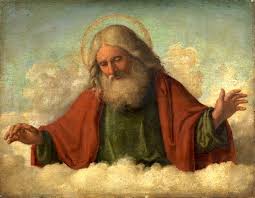
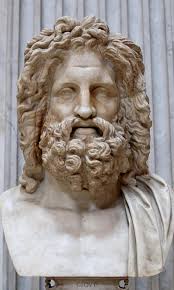
The ancient Greeks and Romans both have expanded stories and tales regarding their polytheistic beliefs. In almost all cases, all of the gods they believed in had originated from another that had either passed away, been killed, or disappeared, according to tale. The Greek gods of Zeus, Aphrodite, etc, as well as the Roman gods of Jupiter and Saturn, all originated through oral tradition. There was no basis for the existence of these gods, although they appeared in countless novels, fables, and stories, most famously in “Homer’s Odyssey”. These gods almost always resembled human form, although there were divine figures that they believed in that resembled what Christians perceive demons to appear as.
These images, according to artists who created them, followed Greek myth which stated the gods appeared and acted like human beings.
Divine Attributes
With the amount of religions that exist, one would think that there would be a common theme for how they behaved. However, if one is to judge a god’s behavior on how their follower’s behave, there seems to be very minimal commonalities.
If there were to be a common theme across all religions, it would be that the higher power commands that everyone, especially women and children, ‘behave’. This could be perceived as submissiveness, peace, following obligation, and acting respectfully.
However, other than this, there are differing opinions about a god’s abilities. Christians and Muslims believe God to be an all-powerful, merciful god (depending on which part of the Bible you read) that in most cases is unable to perform actions that most humans can’t do. Jewish people believe that God is most similar to humans, that there is a direct relationship with God. On the other hand, classical Greeks believe that all of the Gods possess divine abilities; for example, Zeus is able to create thunderstorms and send lightning bolts down to Earth from above.
Summary of Theistic Religions
- Christianity: Monotheistic, belief that God had a son, Jesus Christ, who was born on Earth and died for the salvation of human kind.
- Hellenism: Polytheistic, belief in the gods as fabled from Greek oral tradition.
- Islam: Monotheistic, belief in an all-knowing and all-powerful god Allah
- Judaism: Monotheistic, belief that God has special contact with its followers, which require special actions to be performed.
- Zoroastrianism: Monotheistic/Dualist, believe in a good god (Ahura Mazda) and an evil god (Ahriman).
Upcoming: Posts on Agnosticism and Atheism
This concludes this post on theism, if you’re new to the page and you liked what you read, I suggest you check out the other posts on the home page and subscribe to be on the email notification list. Doing that will give you every blog post in its entirety right in your email so you don’t have to read it in another format. You can subscribe by putting your email into the box below or visiting the Subscribe tab linked at the top of every page. Feel free to leave a comment on the page, but if you’d like to reach out to me privately, shoot me a DM on Twitter @BPlim2.
Take care of yourself and someone else,
-Brandon
 A Look Around Blog