
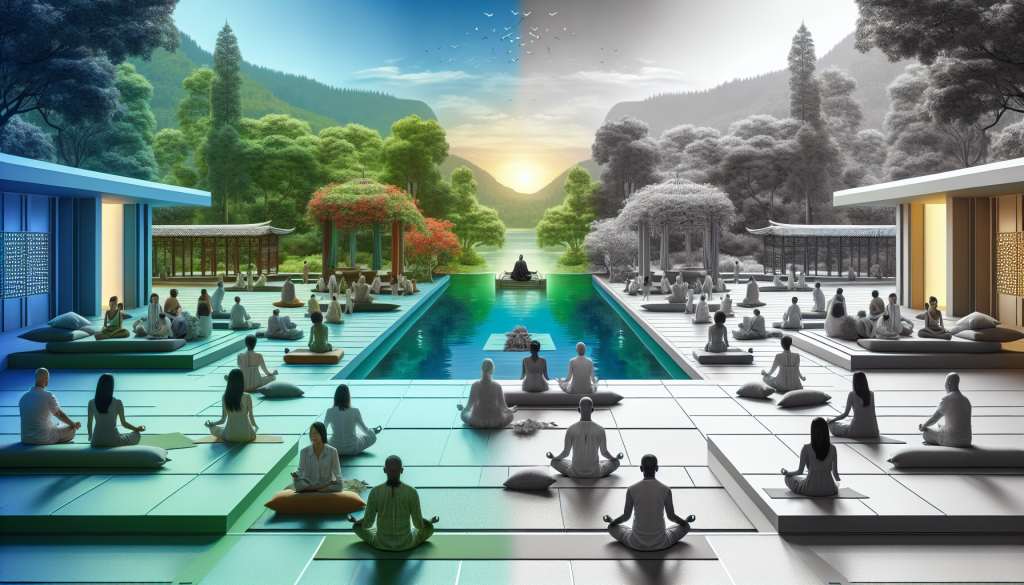
When we perceive the world as adults, color is hardly something the average person gives specific attention to. Our perceptions involve immediate labeling, distancing, and evaluating a level of potential danger. They subconsciously answer the questions of “What is that?” or “How far away is that?”, but hardly do we look at the mundane world around us and judge how the color of everything around us affects our psyche.
Colors independently hold their own value, and can even be tied to concepts like human emotion (i.e. “seeing red” or “feeling blue”). How can we use color to our advantage?
Epigenetics
Similar to a lot of social indicators, the way color is integrated into society has a lot to do with human evolution and anthropology. For most of human history, humans were surrounded by the colors of nature: shades of green, blue, and grey.
Blue, the perceived color of water bodies and the daytime sky, and green, the color of plant foliage, are both colors associated with calmness today and are recommended when creating an atmosphere for meditation.
Genetics
At the genetic level, this article claims that we all perceive color differently. The genes responsible for color perception are carried on the X-chromosome, and are impacted by the environment at the placental and infant level.
Does this mean that men and women will always view color in a slightly different way?
Pharmaceutical companies would claim yes. For example, in the use of sex-specific drug presentation, marketing teams use pastel colors to market certain drugs for women, as opposed to brighter and bolder colors to market to men.
The World in Greyscale
Imagine a world where the ROYGBIV color scale did not exist, and instead the entire world was viewed in greyscale. How would this change the way humans behave and make decisions? I have a few ideas.
(1) I would theorize that there would immediately be a significant decrease in extreme emotion exhibited from everybody. The idea of grey and white clouds seen everywhere makes it significantly more difficult to tie an object or person to an emotion.
(2) Society would be aimed less towards aesthetics and more toward ethical idealization. With less to judge, I would imagine that discussions would be more likely to turn inward.
(3) I can imagine that there would be significantly more industrialization. With no familiar greens and blues in nature, there might be a collective decrease in appreciation for it. This would lead to more deforestation and construction of industry.
Leave a comment below if there’s any other consequences I missed, but otherwise I hope you all have a great rest of your day and I hope you have a successful month of March.
-brandon.
 A Look Around Blog